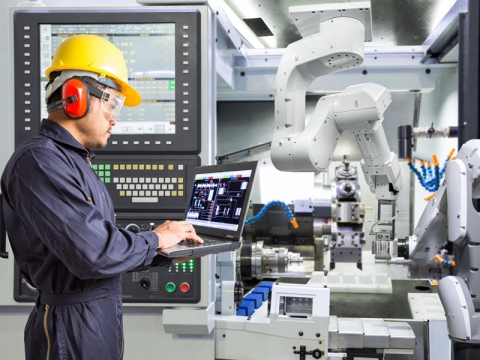
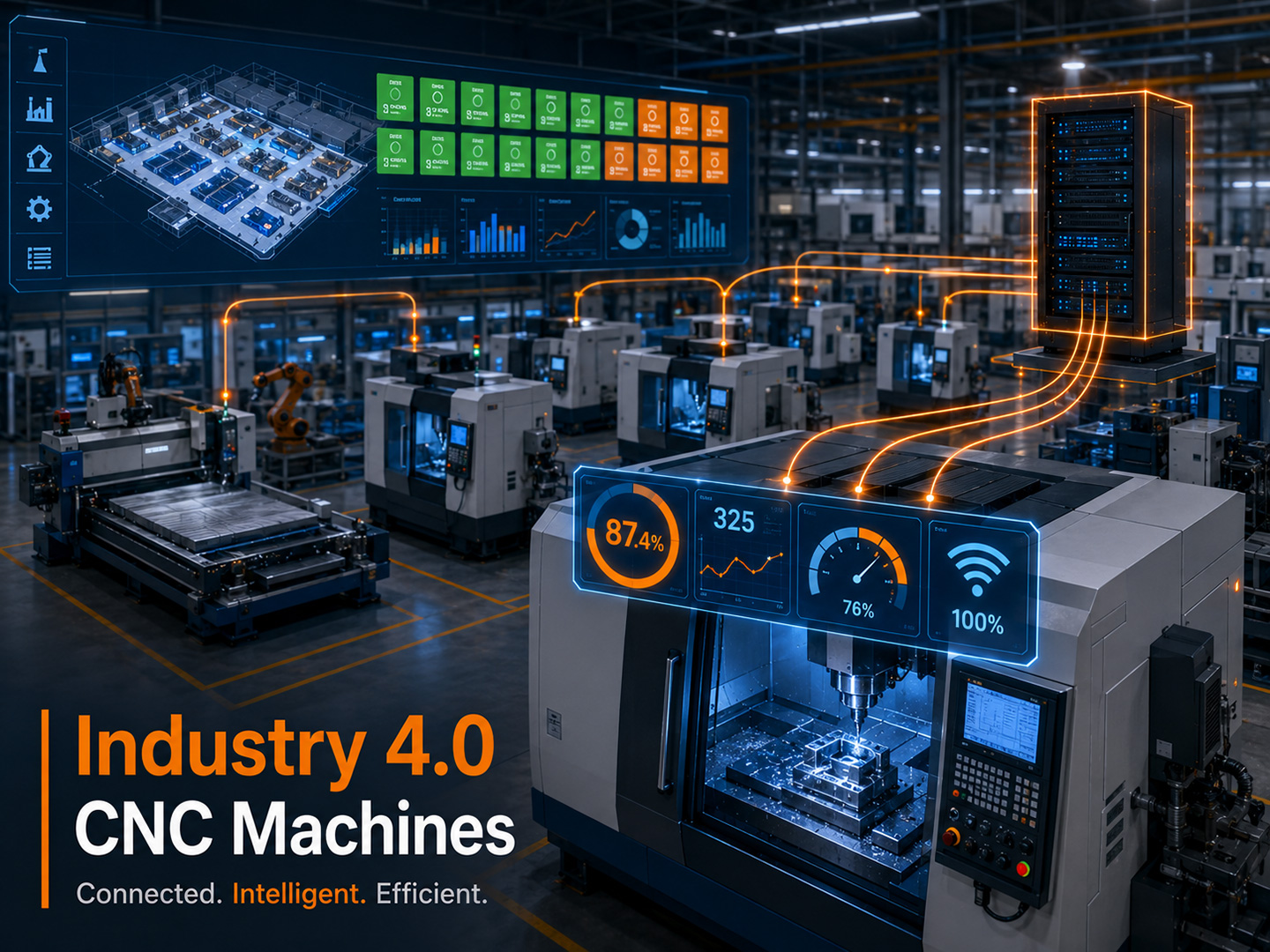
Бұл сөз тіркесі кең ауқымды қамтиды. Қарапайым тілмен айтқанда, 4.0 саласы CNC машинасы жұмыс күйін (ажырату, бос тұру, дабыл) цехтың басқару тақтасына жариялауы мүмкін. Күрделі жағдайда, сол машина MES өз жұмыстарын жоспарлайтын, ERP шығыс сандарын нақты уақыт режимінде алатын, шпиндельдің ағымдағы үрдістерінен болжамды техникалық қызмет көрсету триггерлерін алатын және өндірістегі тексеруден алынған сапалы деректерді келесі бағдарламаға қайтаратын тұйықталған циклде орналасқан. Екі жақ та Industry 4.0 ретінде жіктеледі; олар түрі бойынша емес, жетілу деңгейі бойынша ерекшеленеді.
Industry 4.0 CNC өңдеуін дербес CNC машинасынан ерекшелейтін нәрсе - байланыс және контекст. Дәстүрлі CNC машинасы бағдарламаны іске қосады және бөлшектер шығарады. Industry 4.0 CNC машинасы дәл осылай істейді, сонымен қатар зауыттың қалған бөлігі жұмысты жоспарлау, ақауларды болжау, өнімділікті өлшеу және сапаны жақсарту үшін пайдалана алатын үздіксіз деректер ағынын жасайды.
Индустрия 4.0 архитектурасы: сенсордан ERP-ге дейін
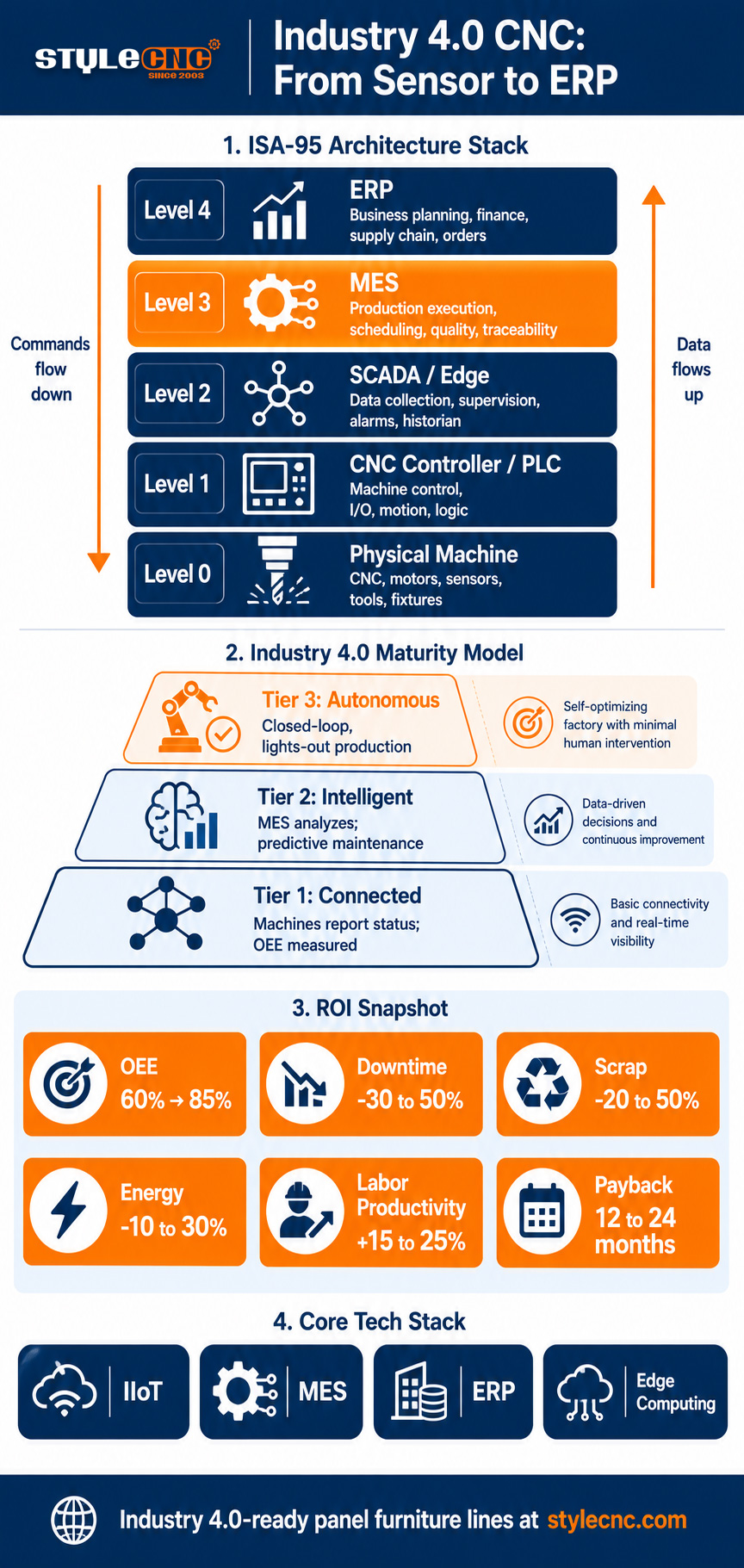
Industry 4.0 CNC өңдеуінің басым архитектурасы өндірісті басқарудың 5 иерархиялық деңгейін анықтайтын ISA-95 стандартына сәйкес келеді. Төмендегі диаграммада деректердің физикалық сенсорлардан кәсіпорын жүйелеріне қалай ағып, ал командалар мен кестелер кері бағытта төмен қарай ағып жатқаны көрсетілген.
4-ДЕҢГЕЙ ERP / Бизнес-жоспарлау
Жоспарлау, түгендеу, қаржыландыру
3-ДЕҢГЕЙ MET / Өндірістік операциялар
Өндірісті бақылау, OEE, бақылау мүмкіндігі
2-ДЕҢГЕЙ SCADA / Шеткі есептеулер
Деректерді жинақтау, жергілікті аналитика
1-ДЕҢГЕЙЛІ CNC контроллері / PLC
Машина логикасы, қозғалысты басқару
0-ДЕҢГЕЙ Физикалық қабат
Сенсорлар, жетек механизмдері, машинаның өзі
Industry 4.0 трансформациясының көп бөлігі өндірісті орындау жүйесі орналасқан 3-деңгейде жүзеге асырылады. MES - цехтың шындығын бизнес-жоспарлаумен байланыстыратын қабат. Ол машинаның күйін төменнен жинайды, ERP жұмыс тапсырыстарын орындалатын кестелерге түрлендіреді, OEE нақты уақыт режимінде есептейді және бекітілген бағдарлама нұсқалары мен сертификатталған құралдар сияқты процесс параметрлерін қамтамасыз етеді.
Деректер стек бойынша үздіксіз ағып отырады: сенсор көрсеткіштері контроллерге, машинаның күйі шеткі немесе SCADA жүйелеріне, жинақталған өндірістік деректер MES-ке және бизнес деңгейіндегі есеп беру ERP-ге жіберіледі. Командалар төмен қарай ағып отырады: ERP жұмыс тапсырыстарын шығарады, MES оларды машиналарға жоспарлайды, контроллерлер бағдарламаларды орындайды, ал атқарушы механизмдер жұмысты орындайды. Екі ағын бір мезгілде жұмыс істейді, бұл архитектураны тек байланысты емес, тұйық циклді етеді.
3 деңгейлі салалық 4.0 жетілу моделі
Көптеген цехтар дәстүрлі CNC жүйесінен толық 4.0 саласына бір қадаммен ауыспайды. Олар жетілу сатысымен көтеріледі, әрбір деңгей келесі деңгейді қаржыландыратын өлшенетін кіріс береді. Төмендегі 3 деңгейлі модель жолды сипаттайды.
1-ДЕҢГЕЙ: Қосылған
Машиналар күйді орталық жүйеге хабарлайды. Цех нақты уақыт режимінде қай машиналардың жұмыс істеп тұрғанын, қайсысының бос тұрғанын және қайсысының дабыл қағып тұрғанын біледі. ӨЭЖ-ны бағалаудың орнына өлшеуге болады. Тек осы деңгейдің өзі ыңғайсыз шындықтарды жиі кездестіреді: 72-ден 76 пайызға дейін ӨЭЖ-ға дейін жұмыс істеймін деп ойлаған цехтар операторлардың есептерін цифрлық деректер алмастырғаннан кейін нақты санның 42 пайызға жақын екенін жиі анықтайды. 1-деңгейлі инвестиция аз. Шпиндельді қозғалтқыштағы ток сенсорын және Wi-Fi микроконтроллерін дайын бөлшектерді пайдаланып, әр машина үшін 200 АҚШ долларынан төмен бағаға жинауға болады.
2-ДЕҢГЕЙ: Ақылды
Деректер талданады және оларға сәйкес шаралар қабылданады. MES басқару тақталары беткі кедергілерді жояды. Болжамды техникалық қызмет көрсету жалаушалары істен шыққанға дейін шпиндельдерді іске қосады. CAM және ERP интеграциясы жүйелер арасында деректерді қолмен енгізуді болдырмайды. Сапалы деректер өңдеу параметрлеріне қайта енеді. Әлемдік деңгейдегі 85 пайыздық OEE нақты нысанаға айналады. Бұл деңгей MES бағдарламалық жасақтамасына инвестиция салуды, қажет болған жағдайда сенсорларды жаңартуды және машина паркіндегі OPC-UA немесе MTConnect хаттамаларын қоса алғанда, байланыс инфрақұрылымын қажет етеді.
3-ДЕҢГЕЙ: Автономды
Зауыт циклды жабады. Машиналар ERP сұраныс болжамдарына негізделген өздігінен кесте құрады. Жасанды интеллект басқаратын түзетулер қысқарту кезінде адамның араласуынсыз жүзеге асырылады. Өндіріс түні бойы басқарылмайтын күйде жұмыс істейді, болжамды техникалық қызмет көрсету ақаулардың тоқтап қалуына әкелмес бұрын алдын алады. Толық 3-деңгейге жеткен цехтар аз, ал олардың көпшілігі аэроғарыш, автомобиль немесе жоғары көлемді электроника саласында. Капиталдық инвестициялар зауыт көлеміне және бастапқы парктің жағдайына байланысты айтарлықтайдан айтарлықтайға дейін өзгереді.
Негізгі технологиялар: IoT, MES, ERP және Edge Computing
Industry 4.0 CNC стегі 4 технологиялық санатқа негізделген. Әрқайсысы архитектураның белгілі бір деңгейіне бағытталған және олардың қосылу тәсілі орналастырудың қаншалықты жетілген болатынын анықтайды.
Өнеркәсіптік IoT (IIoT). Сенсор және байланыс қабаты. Қазіргі заманғы CNC машиналары IIoT мүмкіндігімен жеткізіледі, бірақ көптеген қолданыстағы цехтар аралас парктерді басқарады, онда орташа машина шамамен 9 жыл жұмыс істейді. Салалық зерттеулер өнеркәсіптік компаниялардың 47 пайызы әлі ақылды қосылған активтерді орналастырмағанын көрсетеді. Шпиндельді ток сенсорлары, діріл акселерометрлері және жиек шлюздері сияқты жаңғырту нұсқалары ескі машиналарды IIoT қабатына ауыстыру құнының аз бөлігіне әкеледі.
Өндірісті орындау жүйесі (ӨАТЖ). Операциялық деңгей. ӨАТЖ өндірісті бақылауды, ӨАТЖ мониторингін, кесте құруды, сапаны басқаруды және бақылауды жүзеге асырады. Дәл осы жерде Industry 4.0 ROI ең өлшенетін орынға айналады, себебі ол шикі машина деректерін іс жүзінде қолданылатын өндірістік шешімдерге айналдырады. CNC орталарындағы кең таралған ӨАТЖ платформаларына Ignition, Siemens Opcenter, Plex және SAP MII жатады, сонымен қатар шағын цехтар үшін ашық бастапқы коды бар және lightw8 бұлттық опциялары да қолжетімді.
ERP интеграциясы. Бизнес деңгейі. ERP интеграциясы бөлімшенің не істеп жатқаны мен бизнестің не жоспарлап отырғаны арасындағы алшақтықты жояды. ERP жұмыс тапсырыстары MES-ке автоматты түрде түсіп, өндіріс нәтижелері қолмен енгізусіз ERP-ге қайтарылған кезде, жоспарлау шындыққа бейімделеді. Негізгі интеграция үлгілері SAP, Oracle, Microsoft Dynamics немесе NetSuite және MES арасындағы REST API, OPC-UA немесе жеткізушіге тән қосқыштарды пайдаланады.
Шеткі есептеулер. Жергілікті интеллект деңгейі. Шеткі құрылғылар машиналар мен бұлт арасында орналасады, кідіріс, өткізу қабілеті немесе киберқауіпсіздік барлығының орталық жүйеге ағып кетуіне жол бермейтін жергілікті аналитиканы іске қосады. Шеткі есептеулер - бұл бейімделгіш басқаруды, болжамды техникалық қызмет көрсетуді және нақты уақыт режимінде сапаны тексеруді алыс деректер орталығына бару кідірістерінсіз шеберханада мүмкін ететін нәрсе.
ROI: Салалық 4.0 инвестицияларының кірістілігін өлшеу
Industry 4.0 CNC үшін ROI математикасы бір уақытта бірнеше санат бойынша есептеледі. Әрбір санаттың типтік салалық диапазондары бар, кішігірім цехтар әдетте әр диапазонның төменгі шегінде кірістілікті есептейді, ал үлкен өндірістік орталар көбірек кірістілікті есептейді. Төмендегі кестеде күтілетін кірістілік санаттары қорытындыланған.
| ROI санаты | Типтік жақсарту | Пайда көзі |
|---|---|---|
| OEE жақсартуы | -дан 60% 85 үшін% | Нақты уақыттағы көріну, кестені сақтау, микротоқтаулардың азаюы |
| Жоспарланбаған жұмыс уақытын қысқарту | 30 - 50 пайызға дейін | Сенсорлық үлгіні тануға негізделген болжамды техникалық қызмет көрсету |
| Қалдықтарды және қайта өңдеуді азайту | 20 - 50 пайызға дейін | Процесс барысындағы сапаны бақылау, бағдарламаның күшіне енген нұсқалары |
| Энергияны тұтыну | 10 - 30 пайызға дейін | Бос уақытты анықтау, оңтайландырылған цикл уақыттары, ақылды күту режимі |
| Еңбек өнімділігі | 15-тен 25 пайызға дейін өсім | Деректерді автоматтандырылған жинау, қолмен теруді азайту, жоспарлау тиімділігі |
| Тауарларды тасымалдау құны | 10 - 20 пайызға дейін | ERP интеграциясы материалдың уақытында ағынын қамтамасыз етеді |
| Сапа құны (COPQ) | 15-тен төмендету20% Түсім | Өндіріс барысындағы тексеру ақаулардың кейінгі ағымда таралуына жол бермейді |
| Әдеттегі өтеу кезеңі | 12 -дан 24 айға дейін | Жоғарыда аталған санаттардың операциялық маржаға жиынтық әсері |
Көптеген ROI есептеулеріне ең үлкен үлес қосатын фактор - OEE секірісі. 60 пайыз OEE көрсеткішімен жұмыс істейтін цехтың аппараттық сыйымдылығы 85 пайызбен жұмыс істейтін цехпен бірдей, айырмашылығы ақпарат пен процесс тәртібінде. Қолданыстағы машиналардағы бұл алшақтықты жою әдетте көбірек машина сатып алудан арзанырақ және жылдамырақ, сондықтан MES жеткізушілері мен IIoT интеграторлары Industry 4.0-ді таза шығын бастамасы емес, сыйымдылықты кеңейту стратегиясы ретінде қарастырады.
Кейс-стади: STYLECNC Ақылды панельді жиһаз өндірісі желісі
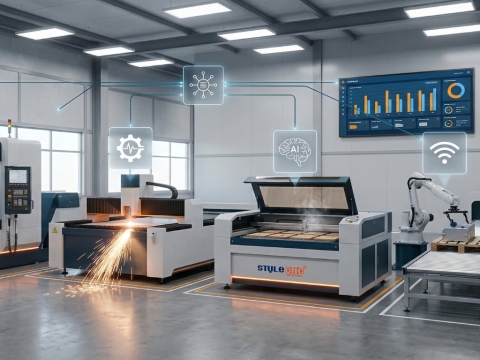
STYLECNC жиһаз өндірісіндегі Industry 4.0 қағидаттарын көрсететін кәсіпорын деңгейіндегі CNC өндіріс желілерін салады. ақылды панельді жиһаз өндірісі желісі автоматты жүктеуді, интеллектуалды ұя салу CAM, ATC CNC маршруттауын, бұрғылауды, жиек жолағын және штрих-код негізіндегі таңбалауды бірыңғай қосылған жұмыс процесіне біріктіреді. Желіге кіретін әрбір панель әрбір операция кезінде жеке бақыланады, сенсор деректері мен цикл санаулары орталық бақылау жүйесіне түседі.
Бұл жол орындарының анықтамалық архитектурасы STYLECNC ISA-95 иерархиясының 0-ден 2-ге дейінгі деңгейлеріндегі жабдықтар, ал тұтынушы орналастыратын MES және ERP 3 және 4 деңгейлерде. толық автоматты CNC фрезерлік панельді жиһаз өндірісі желісі конфигурация - ең көп таралған бастапқы нүкте, толық ұя салатын CAM, парақтарды автоматты түрде тиеу және синхрондалған төменгі ағынды бұрғылау мен жиек жолақтарын қолдайды. шкаф жасауға арналған ақылды ұя салатын CNC маршрутизаторы кішігірім шкаф дүкендері үшін бірдей ұя салу және бақылау мүмкіндігін ұсынады.
Осы өндіріс желісінің қол жеткізуге арналған өлшенетін нәтижелеріне аралас флоттың әдеттегі бастапқы көрсеткіштерінен OEE көрсеткішін 75-тен 85 пайызға дейін жақсарту, MES басқаратын болжамды техникалық қызмет көрсетумен жұптастырылған кезде жоспарланбаған тоқтап қалу уақытын 30-дан 50 пайызға дейін қысқарту және мәжбүрлі ұя салу орналасуы мен штрих-кодпен тексерілген материал ағыны арқылы қалдықтарды 20-дан 50 пайызға дейін азайту жатады. 1-ші пилоттық тоқсанда цехтар қолданыстағы желінің үстіне байланыстырылған кестелерді орнатқан кезде өнімділіктің 5-тен 15 пайызға дейін артуы жиі кездеседі.
Жиһаздан басқа, дәл сол Industry 4.0 қағидаттары көрінеді STYLECNC салалық тік шешімдерді қоса алғанда литий-ионды аккумуляторларды өндіруге арналған лазерлік кесу және дәнекерлеу жүйелері және автомобиль өндірісіне арналған өнеркәсіптік талшықты лазерлік дәнекерлеу роботтарыЕкі орналастыру да тік арнайы MES интеграциясымен бірдей сенсордан ERP деректер ағынын пайдаланады, бұл Industry 4.0 бір ғана өнім емес, цех жұмыс істейтін кез келген өндірістік ортаға қолданылатын жүйелік архитектура екенін көрсетеді.
Глоссарий: Өнеркәсіп 4.0 CNC терминдері
Бұл сілтемені Industry 4.0 жеткізушілерін бағалау, архитектураны жоспарлау немесе MES және ERP құжаттамасын қарау кезінде пайдаланыңыз.
| мерзім | анықтама |
|---|---|
| Өнеркәсіп 4.0 | 4-ші өнеркәсіптік революция заттар интернетімен, киберфизикалық жүйелермен, жасанды интеллектпен және байланысты өндіріспен анықталады. |
| ҚР БҒМ | Өндірісті орындау жүйесі. ERP және цех арасындағы бағдарламалық жасақтама қабаты өндірісті нақты уақыт режимінде басқарады. |
| ERP | Кәсіпорын ресурстарын жоспарлау. Қаржыландыруды, қорларды, жоспарлауды және тапсырыстарды басқаруды өңдейтін бизнес-жүйе деңгейі. |
| OEE | Жабдықтың жалпы тиімділігі. Қолжетімділігінің, өнімділігінің және сапа көрсеткіштерінің нәтижесі. Әлемдік деңгейдегі мақсат - 85 пайыз. |
| IIoT | Заттар өнеркәсіптік интернеті. Цех деректерін жасайтын сенсорлар, контроллерлер және шеткі құрылғылар желісі. |
| MTConnect | CNC машинасының деректер алмасуы үшін арнайы жасалған ашық байланыс протоколы. |
| OPC-UA | Машинадан жүйеге деректер ағыны үшін кеңінен қолданылатын ашық өнеркәсіптік байланыс стандарты. |
| АХС-95 | Бизнес жүйелері мен цех арасындағы интеграция иерархиясын анықтайтын халықаралық стандарт. |
| Бірыңғай атаулар кеңістігі (UNS) | Барлық зауыттық деректер ортақ атау кеңістігі арқылы өтетін шындық архитектурасының бірыңғай көзі. |
| Edge Computing | Жергілікті аналитика алыс бұлтта немесе деректер орталығында емес, машинада немесе оның жанында орындалады. |
Жиі Қойылатын Сұрақтар
Шағын CNC жұмыс орны үшін Industry 4.0 тұрарлық па?
«Практикалық машинист» «4.0 саласы - Біреу осы салада мақтана ма?» тақырыбындағы талқылаулар аралас пікірлерді көрсетеді. Шынайы бағалау бойынша, қарапайым қосылым (1-деңгей) әрқашан дерлік тұрарлық, себебі құны төмен және OEE көрінуі бірден пайдалы. MES толық орналастыру (2-деңгей және одан жоғары) 10 немесе одан да көп машинасы бар цехтар, күрделі жұмыс қоспалары немесе шағын OEE мыңдаған бөлшектерде күрделі қосылыстар пайда болатын өндірістік жұмыстар үшін тиімдірек.
CNC шеберханасы үшін MES жүйесі қанша тұрады?
MES бағалары мүмкіндіктер мен цех көлеміне байланысты кеңінен өзгереді. Ignition сияқты ашық бастапқы коды бар платформаларды бірнеше мың АҚШ долларына және интеграциялық жұмыс күшіне орналастыруға болады. Plex, Siemens Opcenter немесе Epicor сияқты орта деңгейлі коммерциялық жүйелердің бағасы орташа цехтар үшін 20 000-нан 100 000 АҚШ долларына дейін. Ірі зауыттардағы Enterprise SAP MII немесе Oracle Manufacturing Cloud орналастырулары миллиондаған долларға жетеді. SME Manufacturing Engineering қамтуында дайын бөлшектерді пайдаланатын қарапайым үйде қайнату қосылымын негізгі шпиндель күйін бақылау үшін бір машина үшін шамамен 150 АҚШ долларына жинауға болатыны атап өтілген.
Ескі CNC станоктарын Industry 4.0 жүйесіне қосуға бола ма?
Иә. Сала аналитиктері АҚШ шеберханаларындағы орташа CNC станоктарының шамамен 9 жыл екенін атап өтеді, сондықтан жаңартуға арналған қосылым негізгі орналастыру үлгісі болып табылады, жаңадан ауыстыру емес. Жалпы жаңарту тәсілдеріне MTConnect адаптерлері, шпиндельдегі ток сенсорының микроконтроллерлері, діріл акселерометрлері және меншікті контроллер хаттамаларын ашық деректер ағындарына түрлендіретін шеткі шлюздер жатады. Көптеген ескірген машиналар контроллерді ауыстырмай-ақ Industry 4.0 желісіне қосыла алады.
CNC цехы үшін типтік OEE дегеніміз не?
Әлемдік деңгейдегі өнімділік көрсеткіші (ӨЭК) 85 пайызды құрайды, бірақ әдеттегі өндірістік өнімділік көрсеткіші шамамен 60 пайызды құрайды. Бұл алшақтық цифрлық мониторинг оны өлшегенге дейін көбінесе көрінбейді. ШОБ-тан алынған бір мысалда 5 жыл бойы 72-ден 76 пайызға дейін ӨЭК жұмыс істеп жатырмын деп ойлаған, бірақ нақты цифрлық өлшеу 42 пайызды көрсеткен цех туралы құжат бар. Алшақтық аз есептелген қысқа мерзімді тоқтаулардан, кестенің өзгеруінен және қағаз негізіндегі есеп беру кезінде жіберіп алған бос уақытынан туындады.
MES және ERP арасындағы айырмашылық неде?
ERP қаржы, қорлар, тапсырыстарды басқару және жоғары деңгейлі жоспарлау сияқты бизнес деңгейіндегі функцияларды орындайды. MES нақты уақыт режимінде жоспарлау, машиналық мониторинг, сапаны бақылау және OEE өлшеу сияқты өндіріс деңгейіндегі функцияларды орындайды. ERP ISA-95 4-деңгейінде орналасқан және сағаттан күнге дейінгі уақыт аралығында жұмыс істейді; MES 3-деңгейінде орналасқан және секундтан минутқа дейінгі уақыт аралығында жұмыс істейді. Екі жүйе біріктірілген, сондықтан ERP жұмыс тапсырыстары MES кестелеріне енеді, ал MES өндіріс нәтижелері шот-фактуралар мен қорларды жаңарту үшін ERP-ге қайтарылады.
CNC цехымда Industry 4.0 пилоттық нұсқасын қалай іске қосамын?
SME, Excellerant және Jitbase салалық көздері ұқсас үлгімен келіседі. Қай машиналар деректерді жариялай алатынын және қайсысын жаңарту қажет екенін растау үшін қосылым аудитінен бастаңыз. Пилоттық жоба үшін бір өндіріс ұяшығын немесе бір маңызды машинаны таңдаңыз. Оны қосыңыз, 2-4 апта ішінде бастапқы OEE өлшеңіз және 1-ші пилоттық тоқсанда 5-15 пайыздық өнімділік өсімін мақсат етіңіз. Не жұмыс істейтінін құжаттаңыз, содан кейін кеңейтіңіз. Зауыт бойынша MES жүйесін бір фазада орналастыруға тырысатын цехтар әдетте қиындық көреді; бірінші болып пилоттық жобаны жүзеге асыратын цехтар әдетте сәттілікке жетеді.
Bottom Line
4.0 салалық CNC өңдеуі жаңа машиналарды сатып алудан гөрі цехтың иелігіндегі машиналарды қосылған өндірістік жүйенің қатысушыларына айналдырумен байланысты. 1-деңгейлі қосылым бүгінде кез келген цех үшін қолжетімді. 2-деңгейлі MES орналастыру ең үлкен өлшенетін ROI-ді қамтамасыз етеді және көптеген өндірістік орталар үшін табиғи орта мерзімді мақсат болып табылады. 3-деңгейлі автономия - инвестицияны ақтайтын көлемі мен күрделілігі бар цехтар үшін ұзақ мерзімді бағыт.
STYLECNC Интеллектуалды панельді жиһаз желісін қоса алғанда, өнеркәсіптік өндіріс желілері сенсорлық қамту, желілік қосылым және тұтынушы орналастырған MES және ERP жүйелерімен таза интеграцияланған контроллер архитектурасы бар Industry 4.0-ға дайын платформалар ретінде жасалған. Байланыс STYLECNC команда немесе шолу панельді жиһаз өндірісінің шешімдері және кеңірек жиһаз өндірісі желісінің каталогы Nextion орналастыруыңызға арналған Industry 4.0 интеграциясын талқылау үшін.